Hydrogen peroxide sterile transfer window TL-STB series
2021/3/13

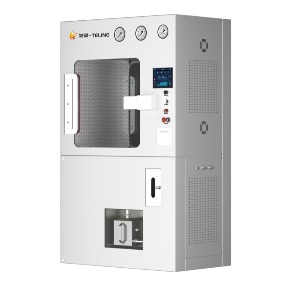
TL-STB series hydrogen peroxide sterile transfer window
1. Background introduction
With the release of SFDA's 2010 version of GMP Appendix 1, Article 7 states: "Minimize the risk of product or processed material contamination by particles or microorganisms as much as possible. Improved the requirements for small items between clean areas and between non clean areas and clean areas, reduced the number of clean room doors, and greatly reduced pollution and cross contamination in the clean area.
Our company's vaporized hydrogen peroxide sterile transfer window uses integrated vaporized hydrogen peroxide sterilization to sterilize all exposed surfaces inside the transfer window, replacing traditional UV disinfection methods. The laminar flow protection of the built-in filter in the transfer window forms an airlock when the double door is opened to prevent cross contamination.
2. Working principle
The hydrogen peroxide sterile transfer window utilizes the advantage of hydrogen peroxide's ability to kill spores in a gaseous state at room temperature compared to a liquid state. Free hydroxyl groups are generated to attack cellular components, including lipids, proteins, and DNA tissues, to achieve sterilization requirements. It is mainly used for material transfer between sterile workshops of different levels in the pharmaceutical industry, and can meet the requirements of sterile material transfer.
3. Technical parameters
Working power supply: AC220 ± 22V 50Hz ± 1Hz
Power: 1600W
Material of the cavity: SUS 316L stainless steel
Cleanliness of the cavity: CLASS A
Sterilizer: 35% food grade hydrogen peroxide solution
Killing rate: The killing rate of thermophilic fat spores and Bacillus subtilis var. niger reaches 6-log.
Sterilization cycle: ≤ 50min
Working mode: Continuous work
Airflow: Vertical unidirectional flow
Various sensors: Non standard customization (can be domestic/imported)
Filter: H14 level
Model: Non standard customization
4. Product model

Hefei Teling Biotechnology Co., Ltd. copyright 皖ICP备2021001288号 {disclaim}