104
Is there any good method for disinfecting and sterilizing space environment and object surfaces?
2022/6/27
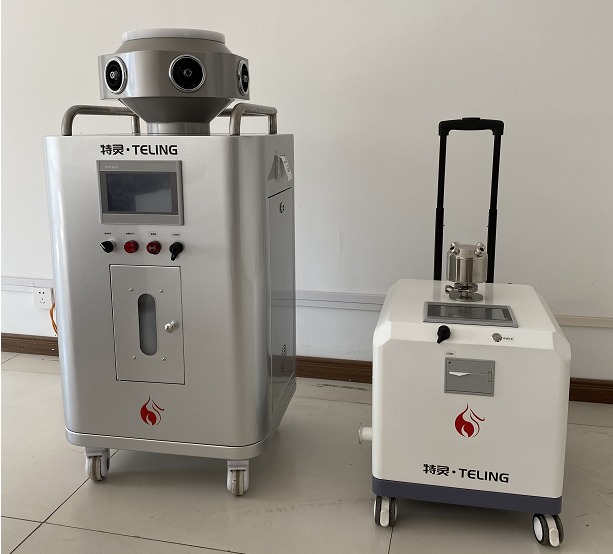
Laboratories, pharmaceutical factories, animal rooms, and other production environments must undergo disinfection and sterilization after a period of use to ensure that the production environment meets relevant production standards. So what are the common methods for disinfecting and sterilizing space environments and object surfaces? The manufacturer of the dry mist hydrogen peroxide disinfection machine will introduce them to you.

The choice of sterilizing agent for gas fumigation is particular, and common ones include formaldehyde, hydrogen peroxide, chlorine dioxide, and so on.
1. Formaldehyde
The disinfection effect of formaldehyde gas is greatly affected by environmental temperature and humidity, and it is necessary to strictly control the temperature and humidity within the specified range during disinfection. When the temperature is above 20 ℃, formaldehyde gas can kill all microorganisms and their spores, but it does not inactivate protein. Formaldehyde disinfection takes a relatively long time and requires a relative humidity of around 70%.
Formaldehyde fumigation disinfection has become a common disinfection and sterilization method in China due to its advantages of broad-spectrum sterilization, convenient use, and low cost.
However, due to the pungent odor of formaldehyde, its gas can irritate the eyes and mucous membranes, and has been confirmed to have a carcinogenic risk. After disinfection, it needs to be neutralized and then ventilated. As formaldehyde will have residues after disinfection, attention should be paid to wiping and removing trace residues on the surface of objects.
2. Chlorine dioxide
Chlorine dioxide is different from general chlorine containing disinfectants. It mainly exerts its disinfection effect through oxidation rather than chlorination, thereby avoiding the production of organic chlorides during the disinfection process. It has the characteristics of broad-spectrum, high efficiency, quick acting, corrosive to metals, bleaching effect on fabrics, and significant influence of organic matter on disinfection effect.
3. Hydrogen peroxide
Hydrogen peroxide has the characteristics of broad-spectrum, high efficiency, quick acting, non-toxic, corrosive to metals and fabrics, greatly affected by organic matter, good stability of pure products, and unstable diluent. Adding other ingredients to existing products to stabilize hydrogen peroxide, enhance its bactericidal effect, and reduce its corrosiveness. The main advantages of hydrogen peroxide disinfection are dryness, rapid action, non toxicity, and no residue.
The current common closed fumigation mode also has certain problems. When using closed fumigation disinfection, if there are multiple core workspaces and there are no multiple disinfection equipment available for simultaneous disinfection, there is a risk of contamination between the disinfected, disinfected, and unsterilized rooms, and even the surrounding environment such as ceilings and peripheral corridors may be contaminated.
So now many companies have started using new disinfection and sterilization modes, and dry mist hydrogen peroxide disinfection machine manufacturers recommend using dry mist hydrogen peroxide sterilization technology.
This technology has been applied to laboratory environment disinfection in Europe for nearly 20 years, especially in recent years, where hydrogen peroxide sterilization technology has developed rapidly in the context of the EU's restrictions on formaldehyde space sterilization.
Firstly, in terms of sterilizing agents, as mentioned earlier, hydrogen peroxide has the characteristics of broad-spectrum, high efficiency, quick acting, and non-toxic. However, hydrogen peroxide can corrode metals and fabrics. Dry mist is a type of water mist particle that is larger than 2.5 microns and smaller than 10 microns. Its characteristic is that when it comes into contact with the surface, it will bounce back without breaking, thus wetting the surface and solving the problem of hydrogen peroxide corrosion of metals and fabrics. It is one of the pioneering sterilization methods.

Links:
Manufacturer of potassium bitartrate
| Ordinary freeze dryer
| Ceramic three hole blade
| Anhui ink inkjet printer
| Email system
Hefei Teling Biotechnology Co., Ltd. copyright 皖ICP备2021001288号 {disclaim}