Comparison of Performance between Dry Mist and Vaporized Hydrogen Peroxide Disinfection Machines
2021/8/10
Comparison of Performance between Dry Mist and Vaporized Hydrogen Peroxide Disinfection Machines
1. Working principle:
Dry mist hydrogen peroxide disinfection machine: Brownian motion, dry mist particles will continuously rebound when encountering obstacles in space, and the diffusion effect is better. Advantages: Better diffusion. Disadvantage: Unable to penetrate efficiently or perform pipeline circulation sterilization.

Vaporized hydrogen peroxide disinfection machine: flash evaporation principle, the disinfectant diffuses into the space in the form of gas molecules by heating the city gas through a heating plate. Advantages: Gas particles at the nanoscale, more evenly distributed and ubiquitous, can pass through efficiently, and can independently circulate and sterilize small chambers such as biosafety cabinets. Disadvantage: Limited diffusion ability, requiring the addition of fans to assist in diffusion for sterilization in large spaces or long diffusion distances.
2. Disinfectant used:
Dry mist hydrogen peroxide disinfection machine: 3-8 pure hydrogen peroxide or 22% hydrogen peroxide+4.5% peracetic acid, diluted ten times with purified water for use, with a concentration of 2.2% hydrogen peroxide+0.45% peracetic acid. Low concentration, better compatibility (because the concentration of hydrogen peroxide used for hand disinfection in daily life is 3%, which can be directly applied to hands)
Vaporized hydrogen peroxide disinfection machine: 35% hydrogen peroxide. It is not recommended to use vaporization when the humidity exceeds 60%. Once condensation occurs, it can cause severe corrosion to the color steel plate and equipment. Therefore, if the initial humidity exceeds 70%, dehumidification must be carried out first. Effective control of temperature and humidity can effectively reduce the risk of condensation
The above are the main differences between dry mist hydrogen peroxide disinfection equipment and vaporized hydrogen peroxide disinfection equipment.
Users can refer to the following main indicators when selecting equipment:
1. Sterilization volume: There are single sterilization units with 300 cubic meters, 500 cubic meters, etc. When the space is large and the number of devices is insufficient, additional equipment or partition block sterilization can be chosen. The sterilization volume marked on the equipment is the volume that achieves a thorough sterilization effect at log6 level. If it is only used for simple disinfection, the disinfection volume can be at least 1.5 to 2 times the sterilization volume.
2. Equipment type: It is recommended to use a dry mist hydrogen peroxide disinfection machine in areas with high humidity; If in addition to space sterilization, enclosed small chambers such as isolators, biosafety cabinets, centrifuges, and lyophilizers need to be sterilized independently, it is recommended to choose vaporization equipment.
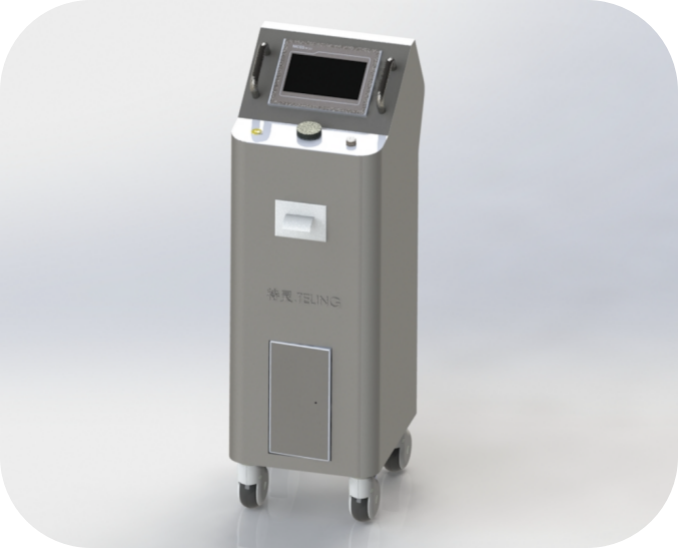
3. Equipment design: Hand pushed or hand-held. Some sterilization spaces are small and large equipment is difficult to place. It is recommended to use hand-held design.
4. Function configuration: The optional functions of the device generally include printer, USB drive export, catalytic decomposition device, infrared rangefinder, real-time monitoring of hydrogen peroxide concentration, hydrogen peroxide residue monitoring, etc.
5. Key Attention:
1) If separate sterilization of small chambers such as biosafety cabinets is required, it is recommended to use vaporization equipment for space sterilization and pipeline circulation sterilization to achieve high efficiency. You can also open the glass door of the biosafety cabinet and sterilize it with atomized hydrogen peroxide
(2) If the frequency of use is high or the humidity in the usage area is high, it is strongly recommended to use atomization equipment, use disinfectant with low concentration and good compatibility, and if it condenses in extreme situations, even if it condenses dozens of times, it will not corrode.

Hefei Teling Biotechnology Co., Ltd. copyright 皖ICP备2021001288号 {disclaim}