Background of hydrogen peroxide space sterilization application
2021/7/6
With the increasing demand for experimental environments, how to achieve high-level disinfection to ensure the normal conduct of various experiments and research, prevent sample contamination incidents, and better protect researchers is becoming increasingly important. The traditional methods of ultraviolet lamps and ozone formaldehyde fumigation both have significant shortcomings, and there is an urgent need to find a safer and more reliable disinfection and sterilization method.
Hydrogen peroxide space sterilization technology is an efficient, non-toxic, and residue free sterilization method that has been widely used in the pharmaceutical and biosafety industries abroad for environmental sterilization, replacing traditional disinfection and sterilization methods such as ultraviolet lamps, ozone, and formaldehyde fumigation. Its main advantages are high sterilization efficiency, safety for personnel, zero residue in the environment, and it is an ideal alternative technology for environmental disinfection and sterilization.
Working principle:
The 2010 version of the GMP Guidelines for Sterile Drugs, pages 418 to 419, provides a detailed introduction to the sterilization principle and no longer includes formaldehyde fumigation.
Sterilization is achieved by spraying dry mist onto the areas that require sterilization. When the average diameter of droplets is less than 10 microns, the sprayed mist is called "dry", hence it is called "dry mist".
Dry fog has the following characteristics:
1. Dry fog droplets (particles) will not settle and undergo irregular motion (Brownian motion principle);
2. Dry mist droplets will not aggregate together to produce large droplets;
3. Dry mist droplets will rebound upon surface contact without breaking, thus wetting the surface;
These characteristics determine its excellent diffusion effect, allowing for good spatial and surface contact in areas that are difficult to reach.
Comparison of Space Dry Mist Sterilization System with Traditional Formaldehyde Fumigation and Ozone
|
item |
Atomized hydrogen peroxide sterilization system |
Formaldehyde fumigation |
ozone |
|
residual |
Basically, there is zero residual surface space |
It is necessary to clean the white crystals after the sterilization process, and it is difficult to completely remove any residue |
It is necessary to remove residues, and it is equally difficult to completely remove them |
|
Chemical toxicity |
Hydrogen peroxide is non-toxic |
Carcinogenic |
Strong oxidizing properties and hazards to the human respiratory system are not certified by EPA |
|
Disinfection and |
The broad-spectrum sterilization effect of log4~log6, such as spores, fungi, etc |
Unable to fully achieve the spore killing effect of log4~log6 |
At high concentrations, it has the effect of killing spores, but due to its fast lysis, it is difficult to achieve the effect of killing spores in a clean room |
|
Overall sterilization time |
2-6 hours |
At least 2 days |
The majority of users operate on a daily basis, which poses a potential risk to the compatibility of the cleanroom environment |
|
Residual neutralization |
No need for neutralization |
Need to neutralize and clean |
------ |
|
authentication |
The atomized hydrogen peroxide sterilization system has passed EPA certification |
Advanced pharmaceutical and biotechnology companies in Europe and America have abandoned this sterilization method |
No EPA certification |
|
Residual detection system |
By using a spatial residual detector, residual hydrogen peroxide can be detected |
------ |
------ |
|
Cost evaluation |
From various aspects such as residue, chemical toxicity, sterilization effectiveness, and certification in accordance with national GMP, national and international standards, all need to be considered in the cost. Less downtime, better employee protection, and easy operation all determine the high cost-effectiveness of the atomized hydrogen peroxide sterilization system. |
||
Product Display

Analysis of Hydrogen Peroxide Space Sterilization Technology
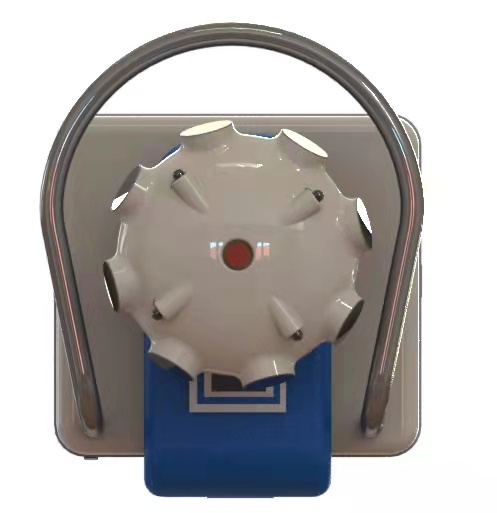
The Teling TL-D300 series dry mist hydrogen peroxide sterilization system uses compressed air as the carrier gas and supplies disinfectant in a quantitative manner. When a small amount of liquid enters the nozzle through the siphon principle and encounters high-speed carrier gas, the gas collides and crushes the droplets strongly, quickly transporting dry mist particles below 10 microns to the far end and spreading well throughout the entire space, thereby achieving efficient sterilization.
The Teling TL-D300 dry mist hydrogen peroxide sterilizer utilizes low concentration hydrogen peroxide and peracetic acid type sporicidal agents to achieve disinfection and sterilization at the 6LOG level; Used in indoor environments to quickly kill viruses, fungi, molds, spores, and other microorganisms in the air and surfaces of objects in enclosed spaces. Using low concentration hydrogen peroxide, only a few milliliters are needed per cubic meter, with a slight increase in environmental humidity. It is non corrosive to instruments, computers, metal products, etc. in the environment. During the disinfection and sterilization process, there is no need for heating, neutralization, or other processes, making it convenient and rapid.
The characteristic of the Teling TL-D300 dry mist hydrogen peroxide sterilizer is the use of low concentration disinfectants to achieve a high level of disinfection effect, without causing corrosion to objects and colored steel plates in the environment. Although some domestic brands also use low concentration disinfectants, most of them are difficult to meet the sterilization requirements of log6. Therefore, heavy metal enhancers such as silver ions are added to the disinfectants or the dosage of disinfectants per unit sterilization space is increased to achieve the goal. This will have irreversible effects on the environment, such as residual heavy metal silver and cumulative toxicity, or high dosage disinfectants causing corrosion to color steel plates, etc.
Summary of the Characteristics of the Teling TL-D300 Dry Mist Hydrogen Peroxide Disinfection System
The TL-D300 hydrogen peroxide space sterilizer is a high-tech product of Hefei Tering Biotechnology Co., Ltd. The unique dry mist hydrogen peroxide sterilization technology can achieve a sterilization effect of 6log using 2.2% concentration hydrogen peroxide+4.5% concentration peracetic acid, and has a log6 sterilization test report issued by relevant Chinese national departments. Under the premise of effective sterilization, it avoids irreversible damage to the environment caused by the use of high concentration hydrogen peroxide. There are numerous pharmaceutical factories, drug testing institutions, universities, and laboratories in China that have achieved good results. This product has a relatively moderate price and high cost-effectiveness among imported products, and the company has professional after-sales service engineers and spare parts warehouses nationwide, which can well meet the domestic after-sales service requirements.

Hefei Teling Biotechnology Co., Ltd. copyright 皖ICP备2021001288号 {disclaim}