163
Final disinfection of hydrogen peroxide equipment
2021/11/11
There are many methods for terminal disinfection, among which hydrogen peroxide has been mentioned the most in recent years. The Technical Specification for Disinfection of Medical Institutions also proposes that hydrogen peroxide can be used for spray disinfection of indoor air. The aqueous solution of hydrogen peroxide (H2O2) is called hydrogen peroxide and is widely used in industries such as chemical, textile, food, pharmaceutical, and healthcare due to its strong oxidizing properties. Hydrogen peroxide has lively chemical properties, easily decomposes into oxygen and water, and causes no secondary pollution to the environment. It is a clean and green chemical disinfectant. Due to these advantages, hydrogen peroxide is also widely used in various disinfection scenarios. The Teling Biological Hydrogen Peroxide Sterilizer provides a complete solution for terminal disinfection.

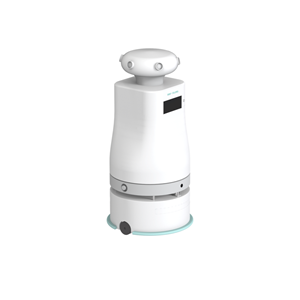
Teling TL-AGV-V100 Vaporized Hydrogen Peroxide Disinfection Robot
Hydrogen peroxide combined with low-temperature plasma can generate a large amount of reactive oxygen species and negative ions, which directly act on unsaturated fatty acids in the cell membrane. Through oxidation reactions, it destroys the cell membrane tissue and achieves the killing of bacteria and fungi. Reactive oxygen free radicals can also oxidize RNA and DNA, thereby breaking, mutating, and changing the thermal stability, making them lose their reproductive capacity and eliminating pathogens. This way fundamentally solves the impact of bacterial resistance on disinfection and sterilization. BAMBOO 801 adopts capillary quantitative evaporation technology with independent intellectual property rights, that is, the equipment vaporizes most of the hydrogen peroxide solution by generating high-speed airflow, negative pressure, heat and expanding surface area, and ionizes oxygen molecules by instantaneous high-pressure treatment of oxygen in the airflow. Ionized oxygen reacts with gaseous water and hydrogen peroxide to generate a large number of reactive oxygen free radicals, molecular hydrogen peroxide and a small amount of gas soluble colloidal hydrogen peroxide, which are sprayed and diffused into the room from the 80m/s high-speed airflow at the nozzle, catching pathogens, destroying their DNA and RNA to achieve disinfection and sterilization. Since the molecular hydrogen peroxide and reactive oxygen free radicals have very small mass, they are very easy to spread and spread, and the disinfection efficiency is much higher than that of aerosol Hydrogen peroxide.